When most investors think of blockchain, they imagine cryptocurrencies, DeFi, or NFTs. But there’s a less-hyped sector quietly building the physical backbone of the decentralized economy — and it’s attracting serious capital.
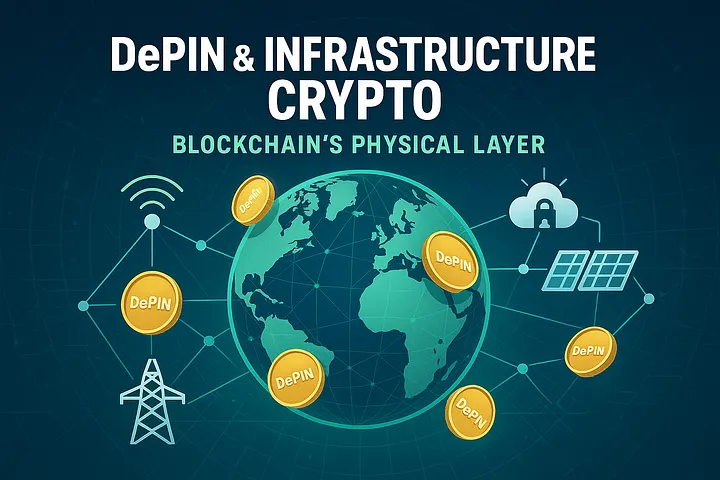
This sector is known as DePIN — Decentralized Physical Infrastructure Networks. Powered by infrastructure crypto projects and DePIN tokens, it connects blockchain technology with real-world physical assets like wireless networks, data storage, energy grids, and IoT devices.
For Forex and cryptocurrency investors seeking stable, scalable, and real-world-tied opportunities, understanding DePIN and infrastructure crypto could be the key to future wealth creation, portfolio diversification, and passive income.
Chapter 1: What is DePIN? The Bridge Between Blockchain and the Physical World
DePIN stands for Decentralized Physical Infrastructure Networks — blockchain-powered systems where individuals and businesses collectively own and operate physical infrastructure.
Examples include:
- Wireless networks (Helium Network)
- Data storage solutions (Filecoin, Arweave)
- Renewable energy grids (Energy Web)
- Sensor networks for smart cities
By integrating blockchain, these networks allow global coordination without centralized control, and participants are rewarded with DePIN tokens for contributing infrastructure and services.
Why It Matters for Investors
Unlike purely digital crypto assets, DePIN projects are tied to tangible, real-world use cases:
* They provide utility-driven demand for tokens. * They tap into multi-trillion-dollar global industries like telecom, energy, and logistics. * They create passive income opportunities for participants.
This blend of crypto innovation and real-world necessity could make DePIN one of blockchain’s most sustainable investment sectors.